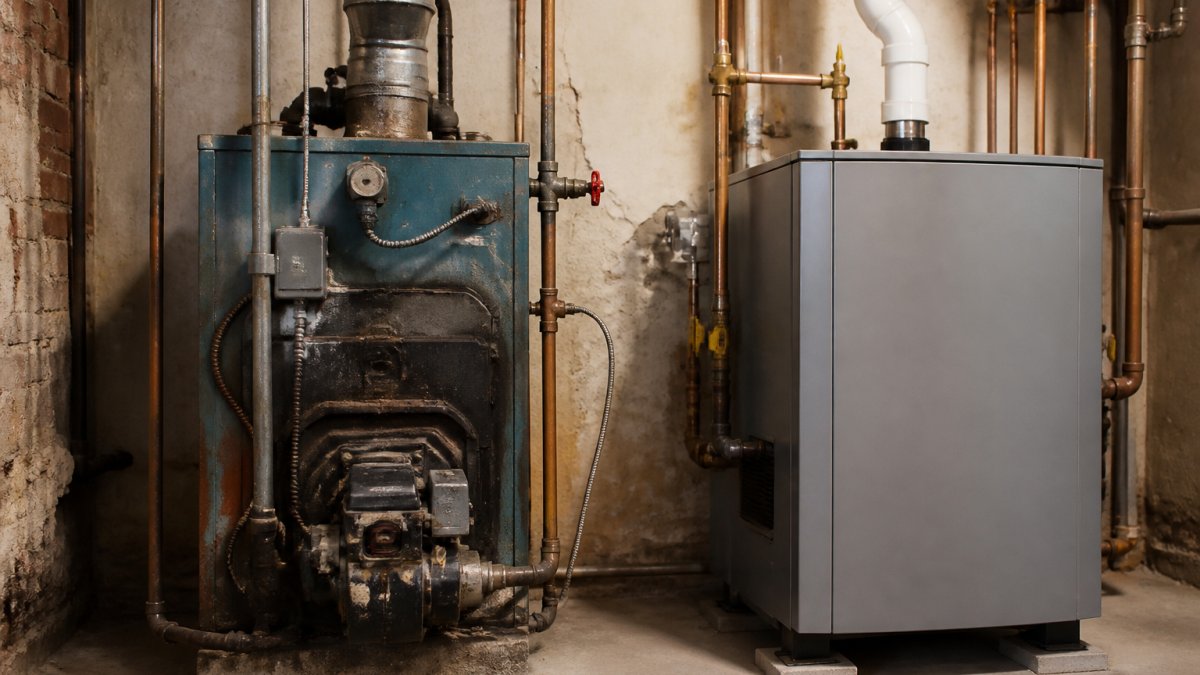
 blog
blog
Repair or Replace Old Boiler: A Homeowner's Guide
Table of Contents
- How Long Does a Boiler Last and When Does Age Matter?
- Signs a Boiler Needs Replacing
- Boiler Repair vs Replacement Cost: Breaking Down the Numbers
- Major Boiler Faults: What Breaks and What It Means
- Safety Warning Signs That Demand Immediate Action
- How Long Does Boiler Replacement Time Take?
- Rebates, Financing, and What to Know Before You Commit
- Conclusion: Making the Call on Your Old Boiler
- Frequently Asked Questions
Last Updated: October 14, 2026
How Long Does a Boiler Last and When Does Age Matter?
Most residential boilers last 15 to 20 years with consistent annual servicing.
Age alone shouldn't decide anything. A well-maintained boiler at year 14 can still be the cheaper option, while a neglected unit at year nine may already be on borrowed time.
At Forge Mechanical LLC, we've walked into basements across Plymouth, Norfolk, and Suffolk counties where a 20-year-old boiler was running fine, and others where a 10-year-old unit was one cold snap away from failing.
Here's the short version: age over 10 to 12 years is a yellow flag, not a red one. Age over 15 with recurring repairs is usually a green light for replacement.
Signs a Boiler Needs Replacing
The clearest signs an old boiler needs replacing are rising energy bills without a usage change, yellow or flickering flames instead of blue, banging or gurgling noises, and repeated breakdowns within the same heating season.
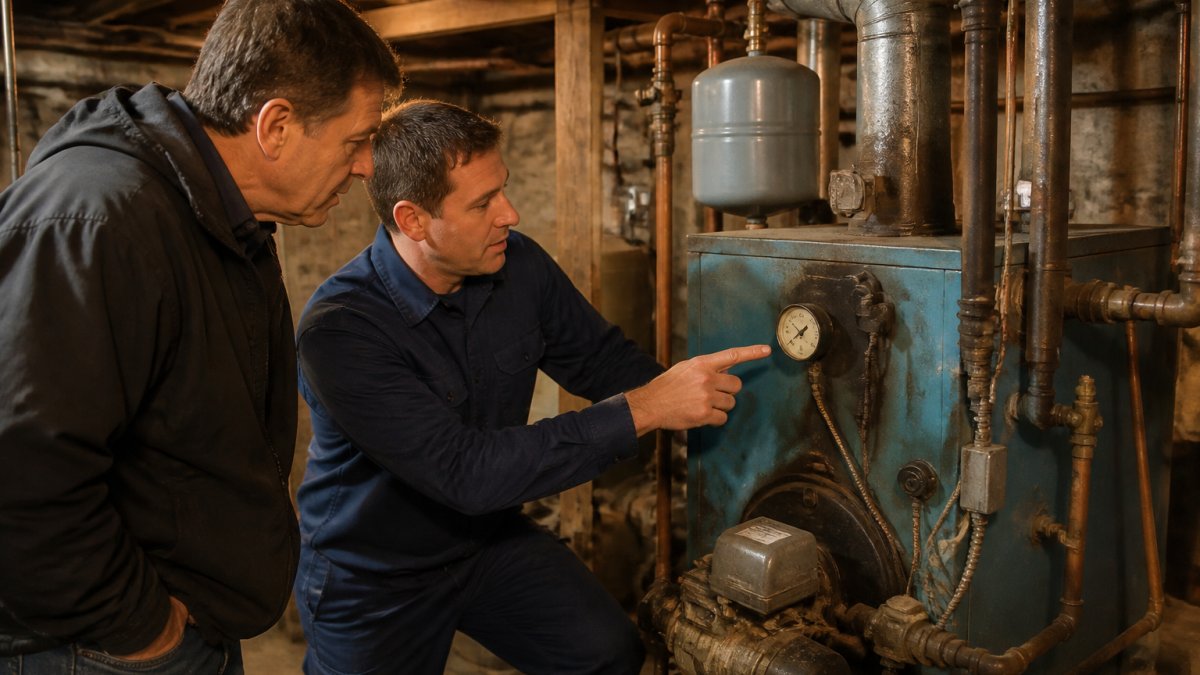
Watch for these specific signals:
- Rising fuel consumption with no change in how you heat the home
- Yellow burner flame instead of a steady blue one
- Banging, kettling, or gurgling sounds during operation
- Water pooling near the base of the unit
- Cold rooms that never reach set temperature
- Two or more breakdowns in a single winter
A common mistake is treating each breakdown as an isolated event. Three service calls in 18 months is a pattern, not bad luck, and it usually points to a system that's reached the end of its reliable life.
Boiler Repair vs Replacement Cost: Breaking Down the Numbers
The honest answer is that repair cost versus replacement cost depends on the specific fault, the boiler's age, and how long you plan to stay in the home. A single component fix is almost always cheaper upfront. But when repair costs stack up across a season, replacement often wins on total spend.
Most guides stay vague here. Below are what actually drives those numbers.
Typical Repair Costs
- Thermocouple or ignition sensor: $150-$400 installed
- Circulator pump replacement: $400-$900
- Expansion tank: $300-$700
- Gas valve: $500-$1,100
- Burner cleaning and tune-up: $150-$350
- Zone valve or control board: $300-$900
- Heat exchanger replacement: $1,500-$3,500+ (often not worth it on an old unit)
Typical Replacement Costs
- Standard efficiency gas boiler, equipment only: $2,500-$5,000
- High-efficiency condensing gas boiler, equipment only: $4,000-$8,000
- Oil-fired boiler, equipment only: $3,500-$7,000
- Electric boiler, equipment only: $1,500-$3,500
- Installation labor: $1,500-$4,000 depending on complexity
- Permits and inspection: $100-$500
- Old unit removal and disposal: $200-$600
- Total installed replacement, typical range: $5,000-$12,000
What Actually Drives the Price
- Fuel type. Oil and propane systems involve tanks, lines, and different burners, which adds labor. Natural gas is usually the simplest swap.
- Venting. A standard atmospheric flue is cheap to reuse. Switching to a high-efficiency condensing unit often requires new PVC venting and a condensate drain, which adds $500-$1,500.
- System compatibility. If the new boiler runs at a different temperature profile than the old one, radiators, baseboards, or zone controls may need adjustment.
- Access. A basement with a wide stairwell is fast. A closet unit or a boiler behind finished walls is slow.
- Code upgrades. Older installs frequently lack a proper expansion tank, backflow preventer, or low-water cutoff. Bringing the system up to current code adds cost but is not optional.
- Season. Emergency winter replacements cost more than planned shoulder-season work.
The Repair Threshold: When the Math Flips
The repair threshold is the point where the cost of a fix stops making sense against the cost of a new boiler. If a repair quote exceeds half the cost of a full replacement, and the boiler is over 12 years old, replacement is usually the better financial call.
Here's how to apply it as a simple decision framework:
- Is the boiler over 12 years old?
- Has it needed two or more repairs in the past 18 months?
- Does the current repair quote exceed half of a replacement quote?
- Is the heat exchanger cracked or the boiler leaking?
- Are energy bills climbing without a usage change?
Three or more checks means replacement is worth serious consideration. One or two checks usually means repair still makes sense.
Major Boiler Faults: What Breaks and What It Means
The most common old boiler faults are failed circulator pumps, faulty thermocouples, clogged burners, leaking seals, and cracked heat exchangers. Some are cheap fixes. Others are effectively terminal.
A circulator pump failure stops hot water moving through the system. It's a contained repair and often worth doing. A thermocouple or ignition fault is similarly minor.
The cracked heat exchanger is the one that changes the conversation.
A leaking boiler section is similar. Once the cast iron or steel sections start weeping, sealing them is a temporary patch at best.
Safety Warning Signs That Demand Immediate Action
Stop using the boiler and call a licensed technician immediately if you smell gas, see soot or black residue, notice a yellow flame, or your carbon monoxide alarm sounds.
These aren't repair-or-replace decisions. They're safety emergencies.
- Gas odor anywhere near the unit
- Carbon monoxide alarm activation
- Soot streaks around the boiler or vents
- Yellow or orange flame instead of blue
- Physical symptoms like headaches or nausea indoors
The U.S. Consumer Product Safety Commission guidance on carbon monoxide is clear that CO exposure is a serious, sometimes fatal hazard, and fuel-burning appliances are a common source. Annual servicing with a qualified technician is the practical way to catch these problems before they become dangerous.
How Long Does Boiler Replacement Time Take?
A standard boiler replacement takes one to three days for most homes. A straightforward swap in an accessible basement can finish in a single day. Complex jobs with pipe modifications, flue work, or system upgrades run longer.
Here's what shapes the timeline:
- Access to the boiler room and existing pipework
- Fuel type and whether the flue needs modification
- System compatibility with existing radiators or baseboards
- Permits and inspection scheduling
Plan for at least one night without heat in most cases, and more if the job is complex. Ask your contractor upfront about the expected downtime so you can plan around it.
Rebates, Financing, and What to Know Before You Commit
Replacement costs can be offset by utility rebates, efficiency incentives, and financing options, but the specifics vary by program and change year to year. We don't quote rebate amounts here because they shift, and a wrong number is worse than no number.
What we can tell you: high-efficiency replacements, especially heat pump systems, often qualify for utility and state efficiency programs. The U.S. Department of Energy guidance on home heating outlines how system efficiency affects long-term operating costs, which is the real driver behind most incentive programs.
Where the Money Comes From
- Federal tax credits. High-efficiency boilers and heat pump systems have historically qualified for federal tax credits under programs like the Energy Efficient Home Improvement Credit. The credit percentage and cap change with each tax year, so confirm the current terms before you buy.
- Utility rebates. Many gas and electric utilities offer prescriptive rebates for qualifying high-efficiency boilers. Amounts typically range from a few hundred dollars to over a thousand, and they usually require the installing contractor to submit the paperwork.
- State and local programs. Some states layer additional incentives on top of federal and utility programs. These are the most volatile and the most worth checking locally.
- Manufacturer promotions. Boiler makers run seasonal rebates and dealer incentives that can stack with the above.
Financing Options to Compare
- Contractor financing. Convenient, but rates vary widely. Ask for the APR, not the monthly payment.
- Home equity loan or HELOC. Often the lowest rate for homeowners with equity, but ties the debt to your home.
- Utility on-bill financing. Some utilities let you repay efficiency upgrades on your monthly bill at a low or zero interest rate.
- Personal loan or credit card. Fastest, usually most expensive. Only sensible for small jobs or short payoff windows.
Warranties: What to Actually Check
- Parts warranty length. Standard is 5-10 years on the heat exchanger and 1-5 years on other components. Some manufacturers offer limited lifetime heat exchanger coverage.
- Labor warranty. Often only 1 year from the installer. This is the one that matters most in year two.
- Registration requirement. Many manufacturers void extended coverage if the unit isn't registered within 30-90 days of install. Ask your contractor who handles this.
- Transferability. If you might sell the home, a transferable warranty is a real selling point.
Regulations and Permits
- Permits. Most jurisdictions require a mechanical permit for boiler replacement. Your contractor should pull it, if they suggest skipping it, walk away.
- Inspection. Expect at least one inspection after install. Budget time for it.
- Code compliance. New installs must meet current code for venting, combustion air, relief valves, and low-water cutoffs, even if the old unit didn't.
- Refrigerant and efficiency rules. If you're considering a heat pump system, federal efficiency standards and refrigerant rules apply and have been changing in recent years.
Before you commit:
- Ask your contractor which rebates your system qualifies for
- Confirm whether the contractor handles the paperwork
- Compare financing terms against paying outright
- Check the warranty length on parts and labor
- Get the final quote in writing before work starts
At Forge Mechanical LLC, we help homeowners navigate efficiency program paperwork as part of the project, so you're not chasing forms after the install is done.
Conclusion: Making the Call on Your Old Boiler
The repair or replace decision comes down to age, service history, and how the numbers stack up against the repair threshold. An old boiler under 12 years with one clean fix is usually worth repairing. An old boiler past 15 with recurring faults, rising bills, or a cracked heat exchanger is usually ready to retire.
If you're staring at a repair quote and wondering whether it's worth it, get a second opinion before you spend. Forge Mechanical LLC offers free project assessments, priority emergency service, and straight answers on what a job actually costs before we start.
Frequently Asked Questions
How long will it take to replace a boiler?
Most residential boiler replacements take one to two days for a straightforward swap of the same type and fuel. If your project involves converting fuel sources, relocating the unit, or upgrading piping and controls, expect two to four days. Cold-weather emergencies and permit scheduling can add time. A licensed technician will give you a realistic timeline after inspecting your system, so you can plan for heat and hot water interruptions.
Is it worth fixing a 20-year-old boiler?
A 20-year-old boiler is past its expected lifespan of 10 to 15 years, so repairs become harder to justify. If the repair costs more than half the price of a new unit, or if you have had two or more breakdowns in the past two years, replacement usually makes more financial sense. A cracked heat exchanger or leaking boiler sections are immediate replacement triggers. Ask a qualified technician for a straight assessment before spending on another fix.
How do I know whether my old boiler needs repair or replacement?
Three factors decide it: age, repair history, and repair cost. If your boiler is over 12 years old, has needed recurring repairs, and the latest quote exceeds half the cost of a new system, replacement is the stronger move. If the unit is under 10 years old with a sound boiler block and the fault is a single component like a circulator pump or thermostat, repair is reasonable. A professional inspection gives you the clearest answer.
How much should I spend repairing an old boiler?
A common rule is to cap repairs at 50 percent of what a new boiler would cost. If a repair quote approaches that threshold and your unit is over 10 to 12 years old, put the money toward replacement instead. Also weigh future repair risk: an aging system with a thin service history tends to fail again soon. Get a written quote and ask the technician to explain what else is near the end of its life.